

At Trove, we automate invoice chasing for hundreds of small businesses across the UK, Australia, New Zealand and Canada. As a result, we see what works when sending reminders.
The data in this article covers invoices that were chased through Trove and subsequently paid. We excluded invoices that remained unpaid at the time of writing since we don’t yet know how many reminders they will ultimately require. Currently, 77% of all invoices chased through Trove are paid with the remainder still active in collections sequences.
80% of unpaid invoices will be collected within two reminder emails
Taking an average across thousands of invoices, Trove’s data shows that 58% of invoices are paid after just one reminder. Send a second reminder and you recover another 21%. That means almost exactly 80% of invoices that get paid are recovered by two reminder emails.
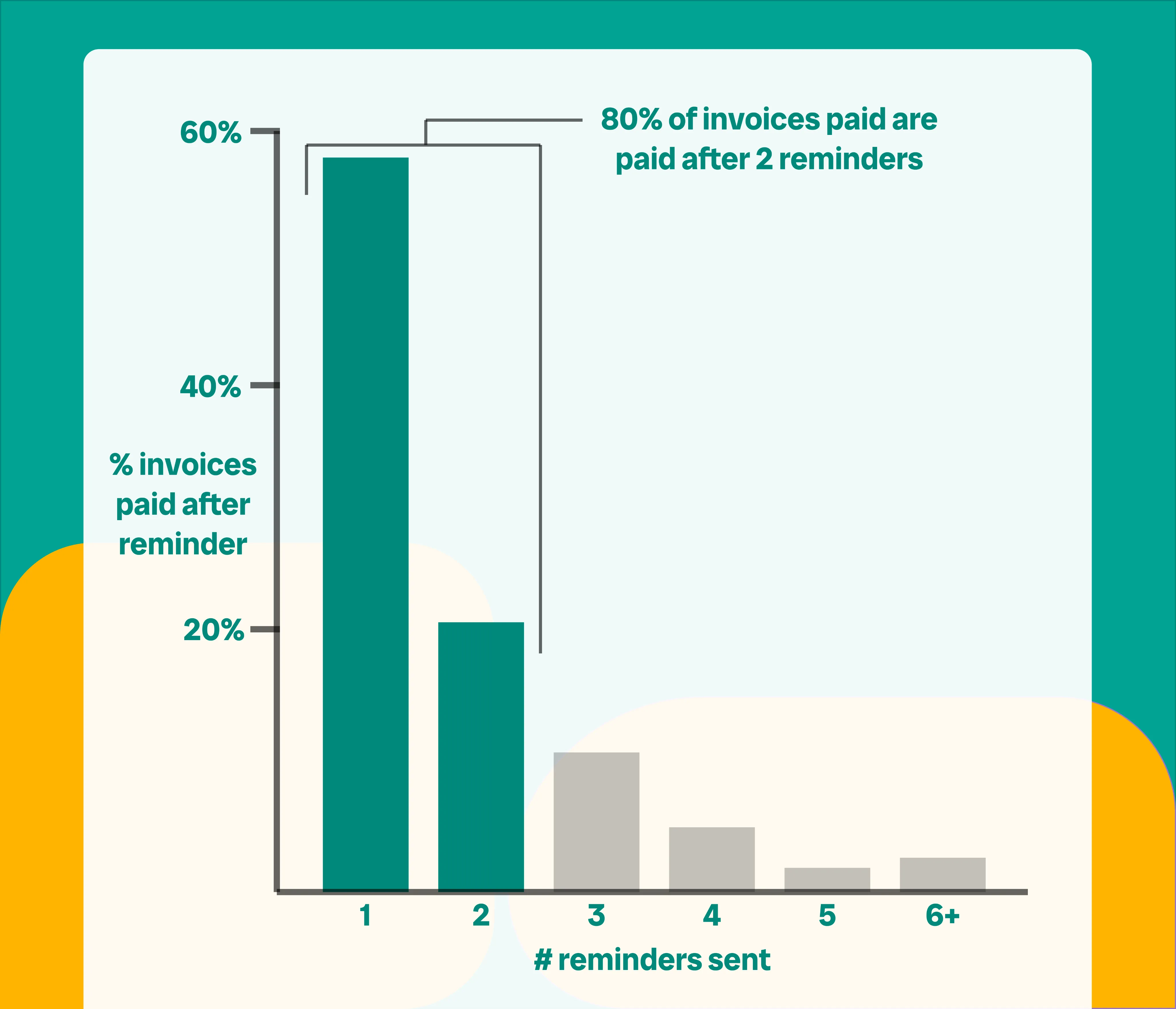
This shows that most customers are not blanking your invoice. They just need a nudge or two. Many people avoid sending follow ups not wanting to seem pushy, but the data shows a gentle reminder works the majority of the time.
If you are reading this as further procrastination from chasing your unpaid invoices, close this tab and get emailing (or start your free trial of Trove).
The long tail: why you shouldn’t stop at two reminders
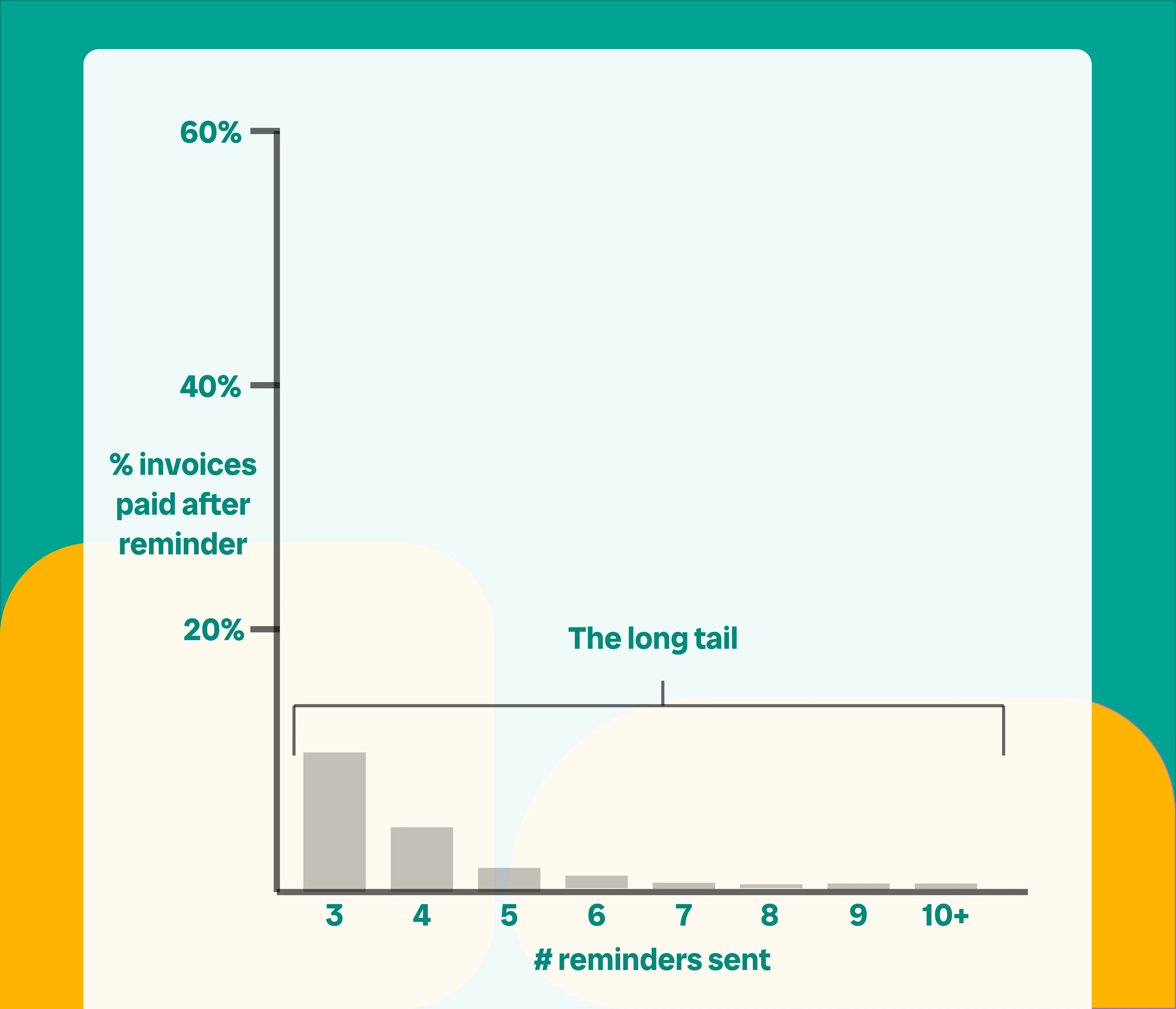
What about the remaining 20% of invoices that get paid? Sending more than two reminders is still worth doing. It is a long tail with each additional reminder recovering an ever smaller % of invoices. While email reminders do become less effective the more you send, invoices have been paid after up to 15 reminders (the current record on Trove).
This is the 80/20 rule applied to invoice chasing. The majority of your problem gets resolved quickly and easily. A stubborn minority needs sustained, patient follow-up but will get there in the end.
What this means for your invoice chasing process
Send at least two reminders as a standard
Most businesses will always send at least one reminder email. Sending two increases your chances of payment significantly and is always worth doing. Don’t worry about seeming pushy (remember the invoices paid after 15 emails…).
Have a longer sequence for high-value invoices
For invoices above a certain threshold (whatever that means for your business) a sequence that runs to five or more reminders is worth having. The data shows that persistence pays even if the incremental recovery per reminder gets smaller each time.
If you’re not hitting roughly these rates of payment, review your own process first
How many of your invoices are being paid after 2 reminders? If you are below 60%, there may be an issue in your own process. Here are some quick wins you can implement to get those payment rates up:
- Send a pre-reminder before invoices become due
- Make sure invoices are received by sending them from your own email address (Xero and other platforms can be spam filtered)
- Send your first reminder as soon the day after the invoice is due
You can also sign up to Trove’s free trial to join hundreds of small businesses getting their invoices paid within a few emails.
Xero’s built-in reminders are a helpful first step and worth using if you’re not already. There are some limitations, such as the fact emails are sent from Xero and can sometimes be caught by spam filters. We’ve written a full guide on when Xero reminders are the right choice and when to consider an alternative here: when to use Xero reminders for chasing invoices (and when to upgrade).
In conclusion: your customers do want to pay you
The data tells a reassuring story. The vast majority of your customers are not ignoring your invoices. They’re just busy and your invoice is not the top of their to-do list. In most cases, two gentle reminders is all it takes to change that.
Some businesses send one reminder and stop. The ones that send two recover 80% of everything that ever gets paid. The ones that keep going recover the rest. Close this tab and get chasing.