
This guide is for small businesses and startups - typically on Xero, often with the owner or one person handling the chasing. If you're a finance team comparing enterprise-grade platforms like Chaser, Kolleno and Upflow, our credit control software compared guide is written for you.
Credit control software (also called debtor management software) automates the process of chasing unpaid invoices. It connects to your accounting system, monitors outstanding balances, and sends payment reminders on a schedule you define without you having to remember to do it manually. For UK small businesses, the main tools worth considering are Credit Hound, Trove, Satago, and Xero’s built-in reminders. This guide covers what each does, who it suits, and how to pick the right one if you don’t have a dedicated finance team.
What is credit control software?
Credit control software automates the process of chasing unpaid invoices. It connects to your accounting system, monitors outstanding balances, and sends payment reminders on a schedule you define.
At a basic level, it handles:
- Sending reminder emails before and after invoice due dates
- Escalating the tone of reminders as invoices age
- Giving you a clear view of who owes you money and how overdue each invoice is
- Logging all contact with a debtor so nothing gets missed
More advanced tools also handle SMS reminders, letter generation, dispute tracking, and integrations with debt collection agencies.
Who needs it?
Credit control software tends to pay for itself quickly if you’re regularly chasing more than ten invoices a month, or if late payment is a recurring cash flow problem.
It’s particularly useful for:
- Small businesses invoicing on payment terms (30, 60, or 90 days) - the longer the terms, the more you need a system
- Service businesses - agencies, consultancies, contractors where invoices are high value and relationships matter
- Accountants and bookkeepers managing credit control on behalf of clients
- Businesses using Xero, QuickBooks, Sage, or FreeAgent - most credit control tools plug directly into these
Credit control software options for UK small businesses
| Tool | Best for | Accounting integrations | Starting price |
|---|---|---|---|
| Trove | Small businesses and their accountants | Xero, FreeAgent, Stripe, NetSuite (not Sage) | From £50/month |
| Satago | Businesses that want credit-risk data alongside chasing | Sage, Xero, FreeAgent, Quickbooks | From £45/month |
| Credit Hound | Sage-specific businesses | Sage, Infor SunSystems, Xero | From £45/month |
| Xero’s built-in reminders | Businesses just starting to formalise their chasing | Xero (it is Xero) | Free |
If you’re a finance team comparing mid-market and enterprise platforms like Chaser, Kolleno and Upflow instead, our credit control software compared guide covers those. For more of the affordable end of the market - including Statey and ezyCollect - see our affordable credit control software round-up.
How to choose the right tool
Size and complexity of your AR process
The price is a good guideline here.
Credit Hound, Trove, Satago and Xero’s reminders are all designed for businesses where one or two people handle invoice chasing - that’s the focus of this guide. If you’re a dedicated finance team with more complex workflows, dispute resolution and reporting requirements, the credit control software compared guide covers Chaser, Kolleno and Upflow instead.
Which accounting software you use
This is often the deciding factor - see the table above. If you are on Xero and have a few options, start by checking out Xero reviews for each software. Look for both positive and recent Xero reviews to make sure the software is still in active development.
Pricing relative to the value of your time
How much time are you currently wasting chasing invoices? If there are tools starting at £45/month, it’s probably worth it. Most businesses find the ROI obvious within the first month.
What good credit control looks like in practice
The most effective credit control processes share a few common features.
They start before the due date. A reminder sent two or three days before an invoice is due removes friction before it builds. Most businesses only chase after payment is late, which means starting from a position of awkwardness rather than helpfulness.
They’re consistent. One reminder followed by silence is not a process. Three reminders, on a fixed schedule, in an escalating tone, is. Automation makes consistency achievable without it taking up headspace.
They separate customers into groups. Not every customer needs the same tone. A long-term client who’s occasionally late is different from a new customer with a pattern of delay. Credit control software lets you build different workflows for different customer types.
They track the data. Days Sales Outstanding (DSO), the average number of days it takes to get paid, is the single most useful metric for understanding whether your credit control is working. Most tools surface this automatically. We’ve written a full guide to the three metrics that actually matter for credit control here.
UK-specific considerations
The Late Payment of Commercial Debts Act
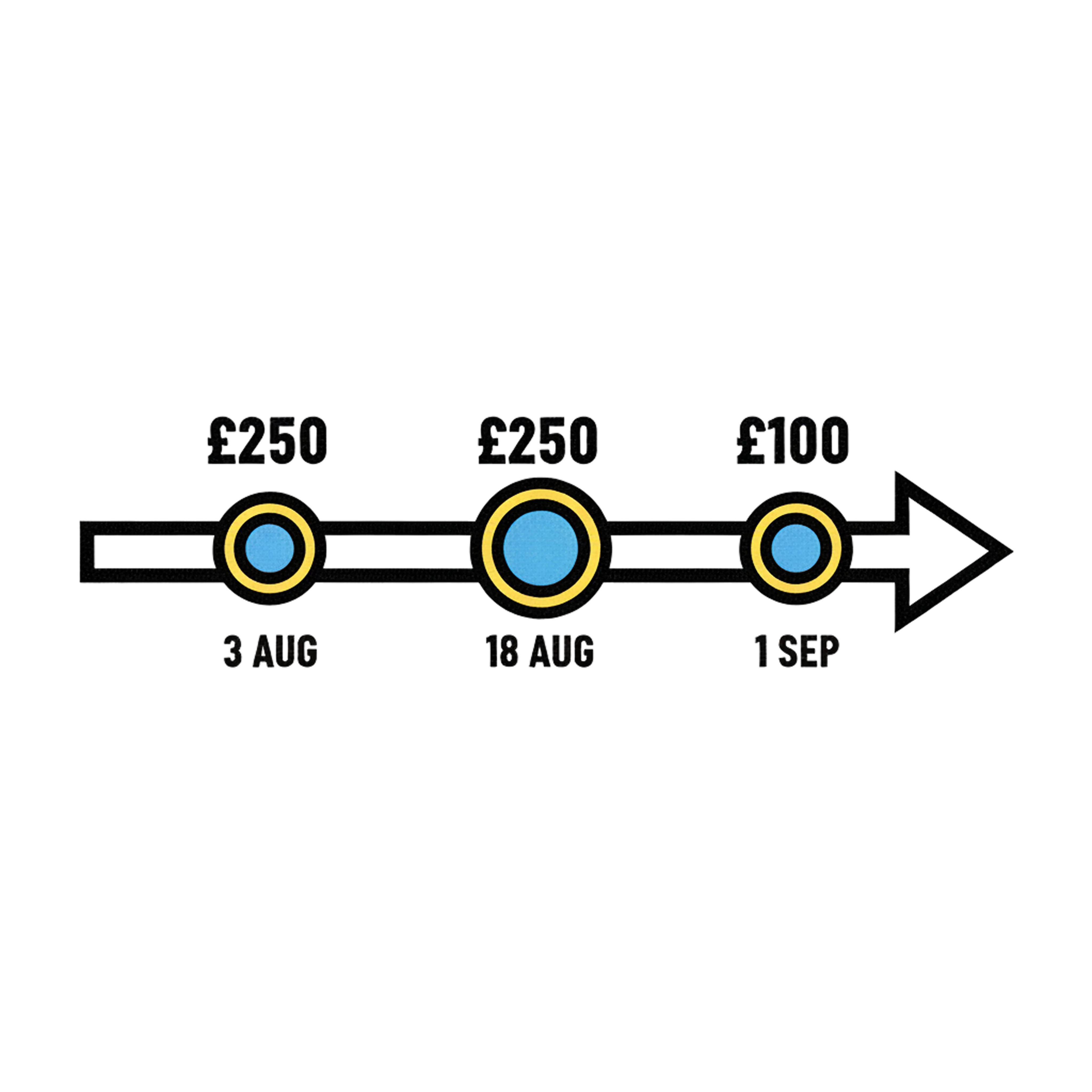
UK businesses invoicing other businesses on payment terms are protected by the Late Payment of Commercial Debts (Interest) Act 1998. This lets you charge statutory interest of 8% above the Bank of England base rate on overdue invoices, plus a flat debt recovery fee of £40, £70, or £100 depending on the invoice value.
Most small businesses don’t enforce this, but knowing you’re entitled to makes escalation reminders feel less awkward to send. We’ve written a guide to calculating and applying late payment fees here.
Payment terms in the UK
The UK Prompt Payment Code recommends 30-day payment terms for most business-to-business transactions. In practice, many businesses still operate on 60 or 90 days - particularly in construction, recruitment, and media. If your customers are consistently pushing to longer terms, your credit control process needs to account for the longer cycle.
HMRC and VAT timing
For VAT-registered businesses, late payment can affect VAT cash flow if you’re on accrual accounting - you owe the VAT to HMRC regardless of whether your customer has paid you. This is a strong practical argument for keeping DSO low.
Where to go next
This guide covers the basics. For more detail on the SMB side of the market, here’s where to go next:
- Affordable credit control software - Statey, Satago, ezyCollect and Trove compared
- Affordable credit control software pricing - what each of those actually costs
- Statey alternatives: Xero statement add-ons compared - for businesses that mainly need statements automated
- Satago alternatives: the best tools for chasing, credit checks and invoice financing - for splitting Satago’s three jobs out into dedicated tools
- Tracking overdue invoices across a team in Xero - for a shared view when more than one person chases
- Affordable dunning software - pricing across the wider dunning market
- AI credit control software for small businesses - what AI actually adds to chasing, and how much you need
For the wider market, including enterprise-grade platforms, see the full credit control software guide.
Trove is credit control software for UK small businesses. It connects to Xero, FreeAgent, NetSuite and Stripe, and takes about 15 minutes to set up.